 Spiritus®
Spiritus®
Spiritus®
Expanded States
Not because it is unavailable. Because the conditions required to access it are rarely created. Expanded states of consciousness create those conditions.
When approached skillfully and safely, expanded states can allow individuals to move beyond habitual patterns of thought, emotion, and identity — opening space for insight, emotional processing, creativity, healing, and profound shifts in perspective.
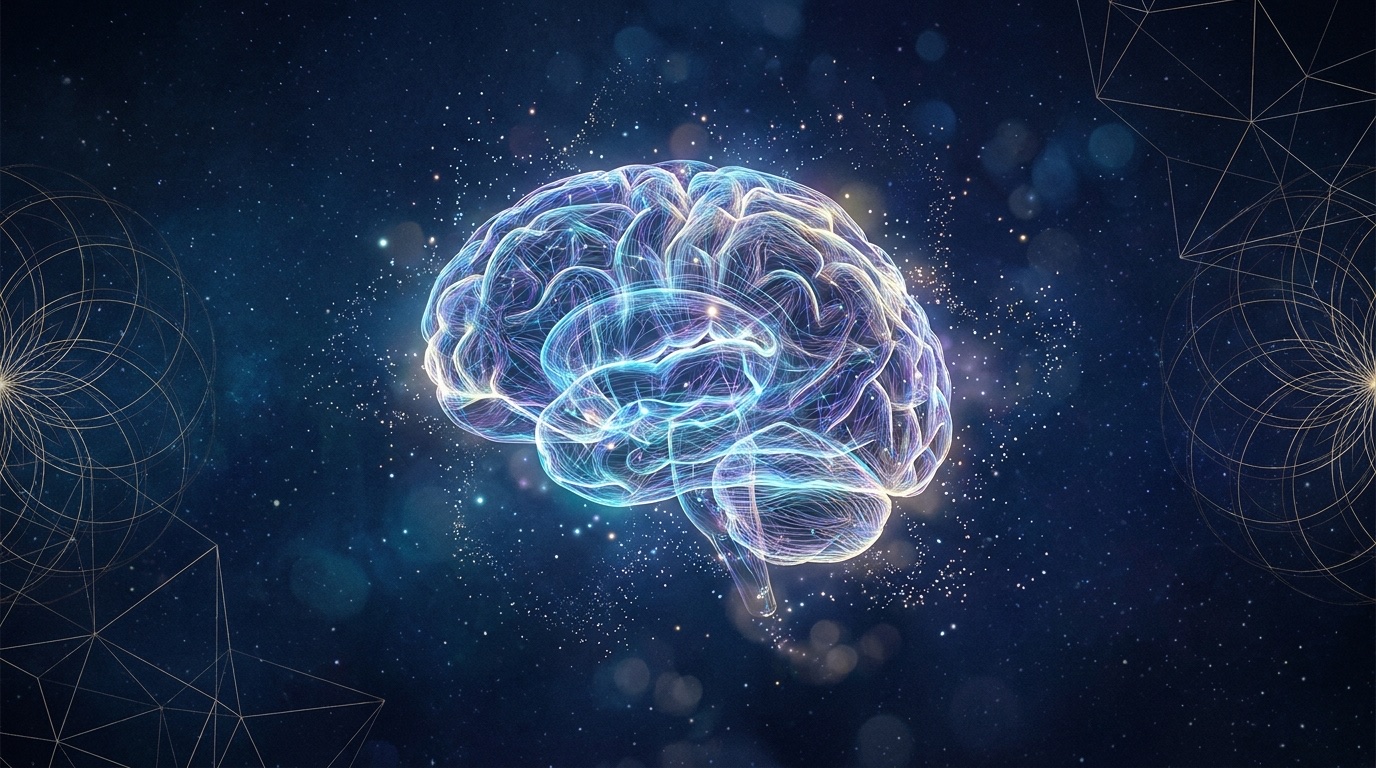
When the nervous system settles into an expanded state of consciousness, measurable changes begin to occur within the brain and body.
Patterns of dominant beta activity—associated with focused attention, analytical thinking, and continuous cognitive processing—often begin to soften, while slower theta brainwave states associated with creativity, imagery, emotional processing, and memory integration become more prominent.
Neurochemistry shifts as well. Emerging research suggests changes in neurotransmitter and hormonal activity, including serotonin, dopamine, oxytocin, and cortisol, which may influence emotional regulation, connection, learning, and stress response.
Research also suggests decreased activity within the Default Mode Network (DMN), a network associated with self-referential thinking, habitual mental patterns, and the ongoing narrative of identity. As activity within this network decreases, communication between previously distinct regions of the brain may increase, creating greater cognitive flexibility and new possibilities for perception and experience.
These changes are associated with neuroplasticity—the brain’s capacity to reorganize, form new neural pathways, and encode new patterns of thought, feeling, and behavior.
For some individuals, this can create access to insight, emotional breakthroughs, creative inspiration, and meaningful shifts in perspective that may feel difficult to reach through ordinary states of awareness alone.
While each person’s experience is unique, these physiological and neurological shifts may help explain why experiences in expanded states of consciousness can often catalyze profound and enduring transformation.
Expanded states enrich the human experience by opening access to intuition, imagination, creativity, emotional insight, and expanded awareness.
They can deepen a lived sense of meaning, coherence, connection, and presence—allowing individuals to experience themselves and life from a broader perspective.
Throughout history, expanded states have played a central role in contemplative and mystical traditions around the world, including Sufism, Yoga, Zen Buddhism, and Christian contemplative prayer.

Research into expanded states of consciousness has entered a new era of scientific and clinical inquiry.
Leading universities, medical centers, and neuroscience institutions are exploring the therapeutic potential of expanded states in relation to depression, PTSD, addiction, trauma, end-of-life anxiety, eating disorders, and neurodegenerative disease.
Institutions such as Johns Hopkins Center for Psychedelic and Consciousness Research, Icahn School of Medicine at Mount Sinai, and Imperial College London have helped advance serious scientific investigation into consciousness, healing, and human potential.
Texas has also emerged as an important center for neuroscience, trauma research, mental health innovation, and the broader brain economy. Institutions including Dell Medical School, UTHealth Houston, UT Southwestern Medical Center, The University of Texas at Dallas, The University of Texas Medical Branch, and The University of Texas at San Antonio are contributing to this growing body of work.
In 2025, the Texas Legislature approved $50 million in funding for ibogaine research focused on addiction, trauma, and traumatic brain injury—one of the largest public investments in psychedelic medicine in the United States.
At the federal level, momentum continues to build for psychedelic-assisted therapies through expanded research initiatives, accelerated regulatory pathways, growing institutional support, and at least $50 million in federal research matching funds advancing evidence-based psychedelic research and clinical innovation.
These developments reflect a growing recognition that expanded states of consciousness represent an important frontier in the study of healing, resilience, human performance, and human potential.
The Bridge
Stanislav Grof spent decades conducting and overseeing LSD-assisted psychotherapy research — first at the Psychiatric Research Institute in Prague and later at Johns Hopkins University and the Maryland Psychiatric Research Center.
Through thousands of clinical sessions, Grof observed how expanded states could access layers of trauma, addiction, existential distress, and psychological material often difficult to reach through conventional therapeutic frameworks alone.
When psychedelics became illegal in the early 1970s, Grof asked a different question:
How can these therapeutic states be accessed without a pharmacological substance?
The answer became Holotropic Breathwork®.
Developed by Stanislav and Christina Grof at Esalen Institute, Holotropic Breathwork® combines cyclical breathing, evocative music, focused bodywork, and a carefully facilitated setting to access expanded states through the body’s own innate capacities.
The name itself reflects the orientation of the work:
from the Greek holos (whole) and trepein (moving toward).
Moving toward wholeness.
Holotropic Breathwork® represents a distinct, non-pharmacological pathway into expanded states of consciousness — one emerging directly from the same research lineage helping shape today’s growing interest in neuroplasticity, trauma healing, and consciousness research.